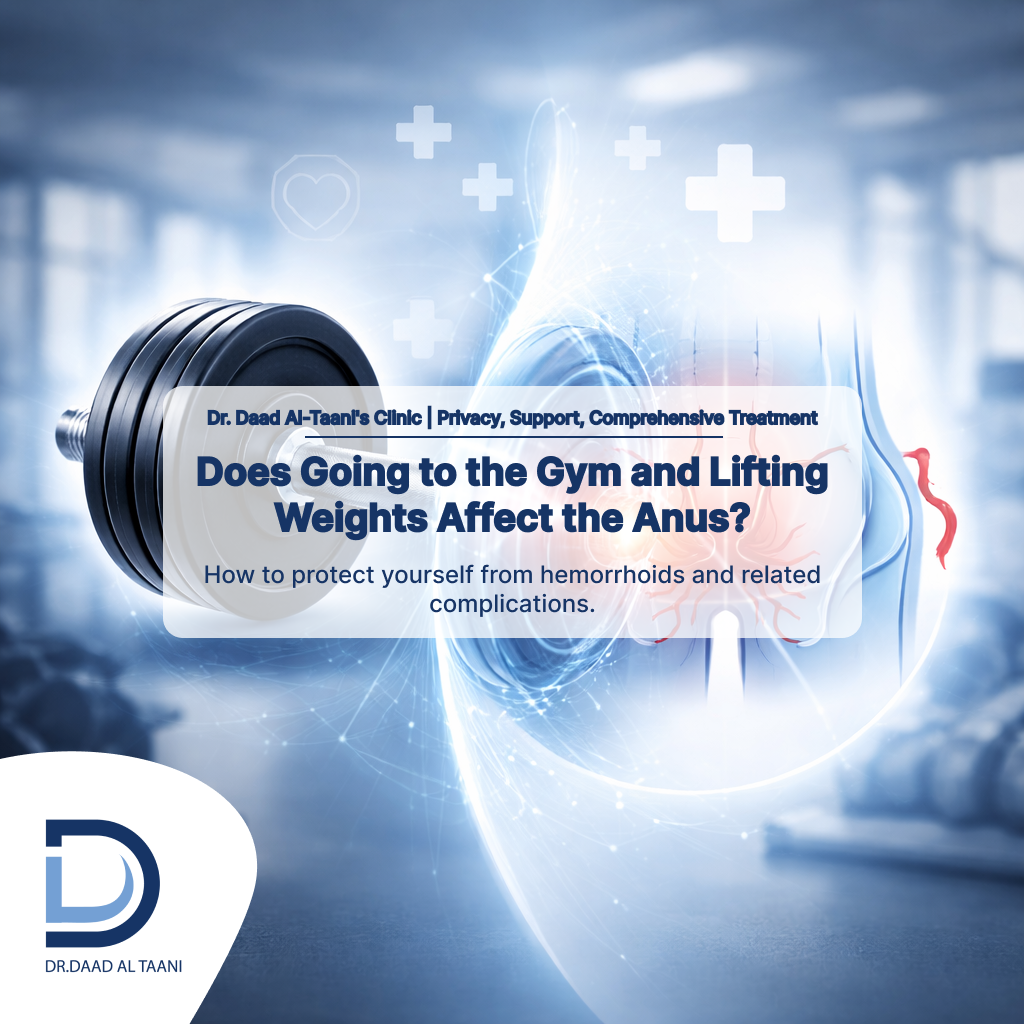
Does Gym Training and Weightlifting Affect Anal Health? Tips to Avoid Complications | Dr. Daad Al-Taani

Gym training and weightlifting are among the most effective ways to improve overall health, build muscle strength, and enhance physical fitness. However, when performed incorrectly or excessively, they may place pressure on the anal and rectal area, increasing the risk of certain problems. Understanding this relationship is essential for preventing complications and maintaining safe exercise habits.

Dr. Daad Al-Ta’ani, Specialist in General and Laparoscopic Surgery, highlights that improper training techniques can contribute to the development or worsening of anal conditions, especially in individuals who already have underlying issues such as hemorrhoids.

How Gym and Weightlifting Affect Anal Health

During heavy lifting, intra-abdominal pressure increases significantly. This pressure can affect the veins in the rectal area, leading to:

  • Increased risk of hemorrhoids
  • Worsening of existing hemorrhoid symptoms
  • Pressure on pelvic blood vessels
  • Pain or discomfort after workouts

In some cases, individuals may experience burning sensations, a feeling of heaviness, or discomfort in the anal region, especially after intense workouts or improper lifting techniques.

When Does Gym Become a Risk Factor?

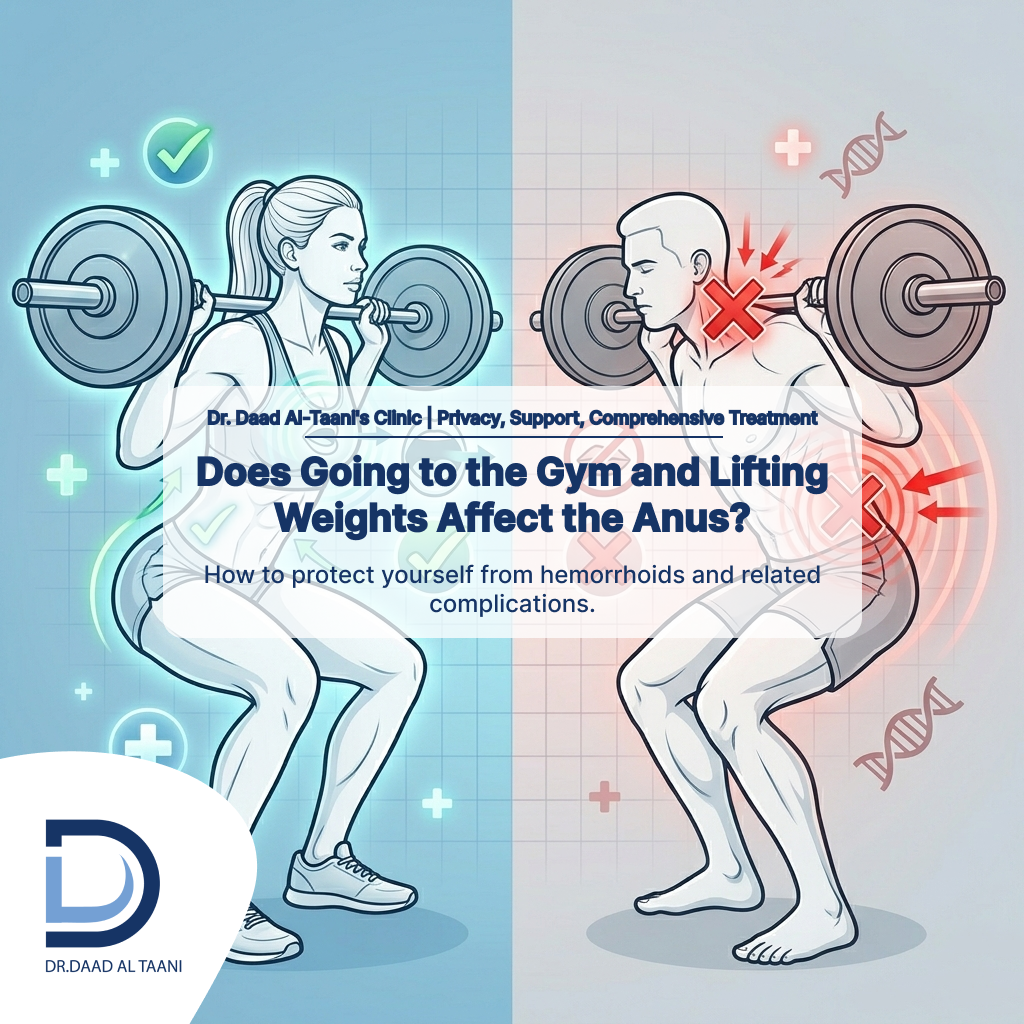
Gym training itself is not harmful, but certain habits can increase the risk of anal problems, including:

  • Lifting very heavy weights suddenly
  • Holding the breath during lifting (Valsalva maneuver)
  • Poor lifting technique
  • Pre-existing conditions such as hemorrhoids or anal fissures

These factors can increase pressure in the abdominal and pelvic areas, potentially triggering or worsening symptoms.

How to Exercise Safely?

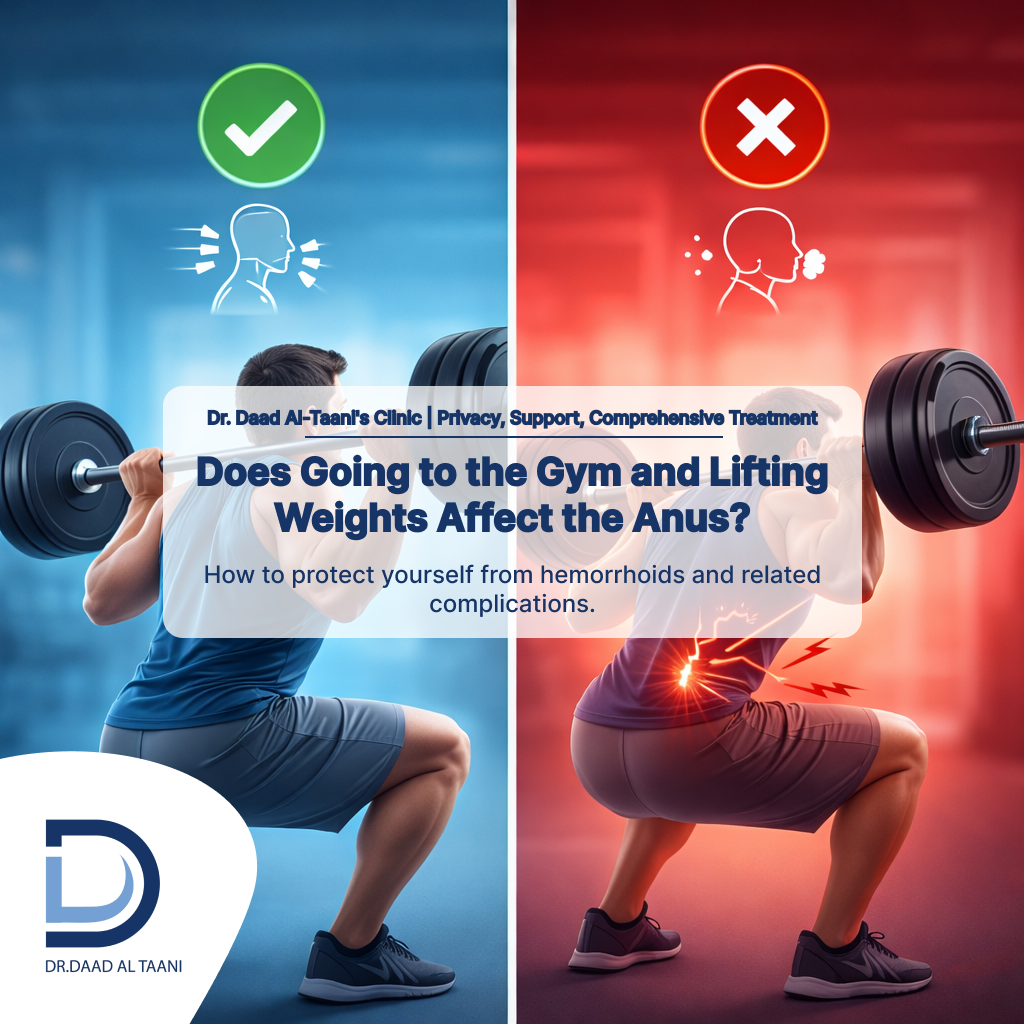
To reduce the risk of complications, it is important to follow proper exercise guidelines:

  • Choose weights appropriate for your fitness level
  • Maintain correct breathing lifting
  • Avoid excessive straining
  • Warm up properly before workouts
  • Stay hydrated
  • Follow a high-fiber diet to prevent constipation

These measures help reduce internal pressure and protect the anal area from unnecessary strain.

When Should You See a Doctor?

According to Dr. Daad Al-Ta’ani, you should seek medical advice if you experience:

  • Persistent anal pain
  • Bleeding during or after bowel movements
  • Swelling or a lump in the anal area
  • Symptoms that do not improve after rest

Early evaluation helps identify the cause and prevents further complications.

Conclusion

Gym workouts and weightlifting are beneficial for health, but improper practice may lead to or worsen anal problems. Following correct techniques and maintaining balance in training can significantly reduce these risks. If any unusual symptoms appear, consulting a specialist such as Dr. Daad Al-Ta’ani is essential for proper diagnosis and treatment.

Share:

Tags:

Latest Articles
Tags

You Can Contact Us Anytime

Related Articles

Call Now اتصل الآن

يمكنك البحث عن الخدمات التي نقدمها

You can search for the services we provide