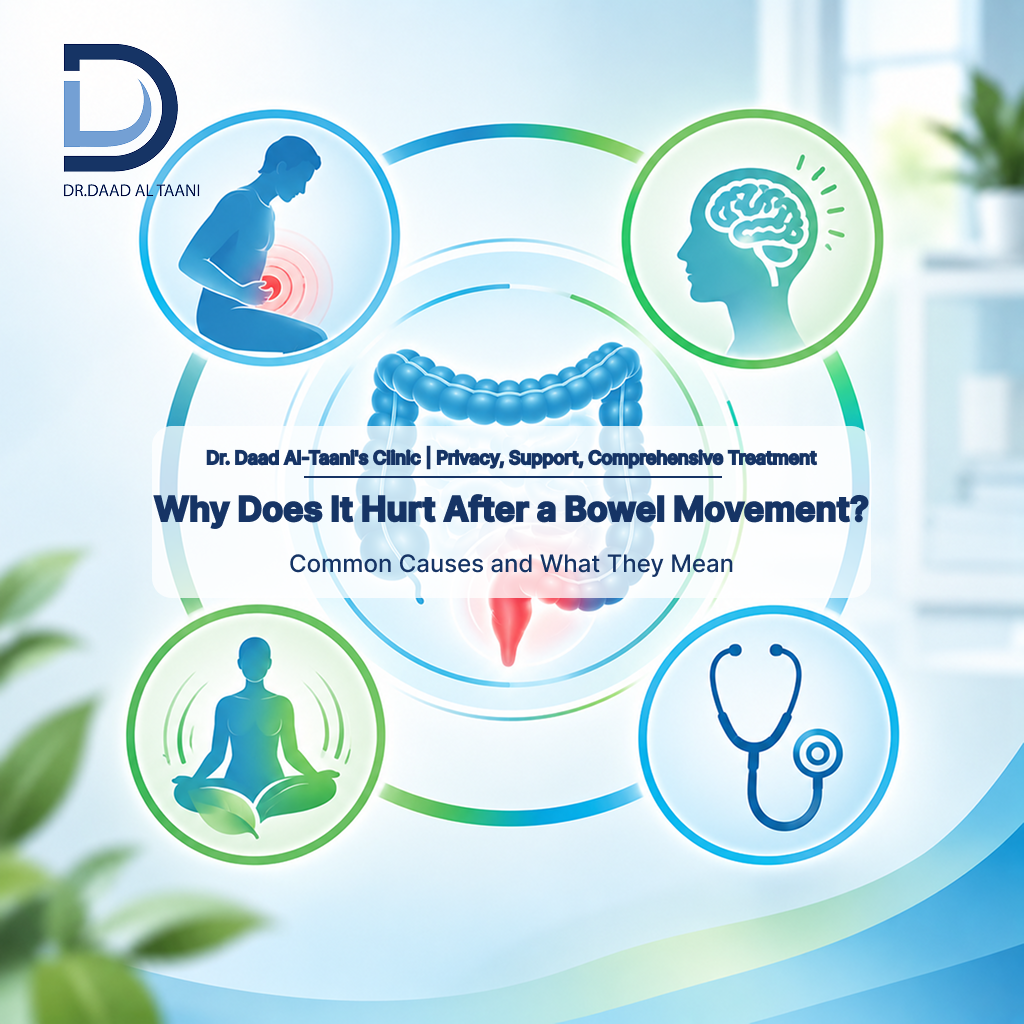
Proctoscopy (or sigmoidoscopy) is an essential medical procedure for examining the rectum and lower colon. Many patients wonder when this examination is necessary and what conditions require it. In this article, we explain the main reasons, benefits, and how proctoscopy is performed at Dr. Dhad Al-Ta’ani Clinic
When Do You Need a Proctoscopy? Causes, Benefits, and Procedure
What is a Proctoscopy?
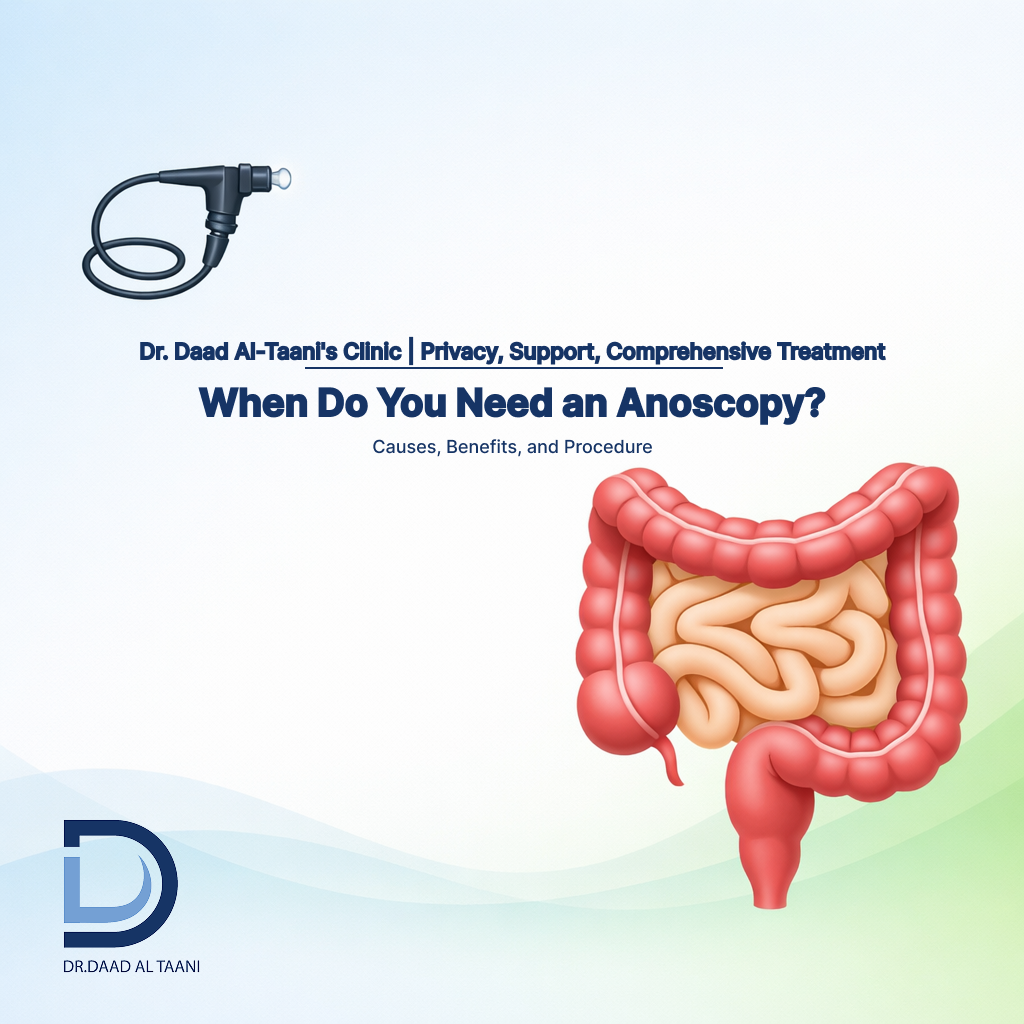
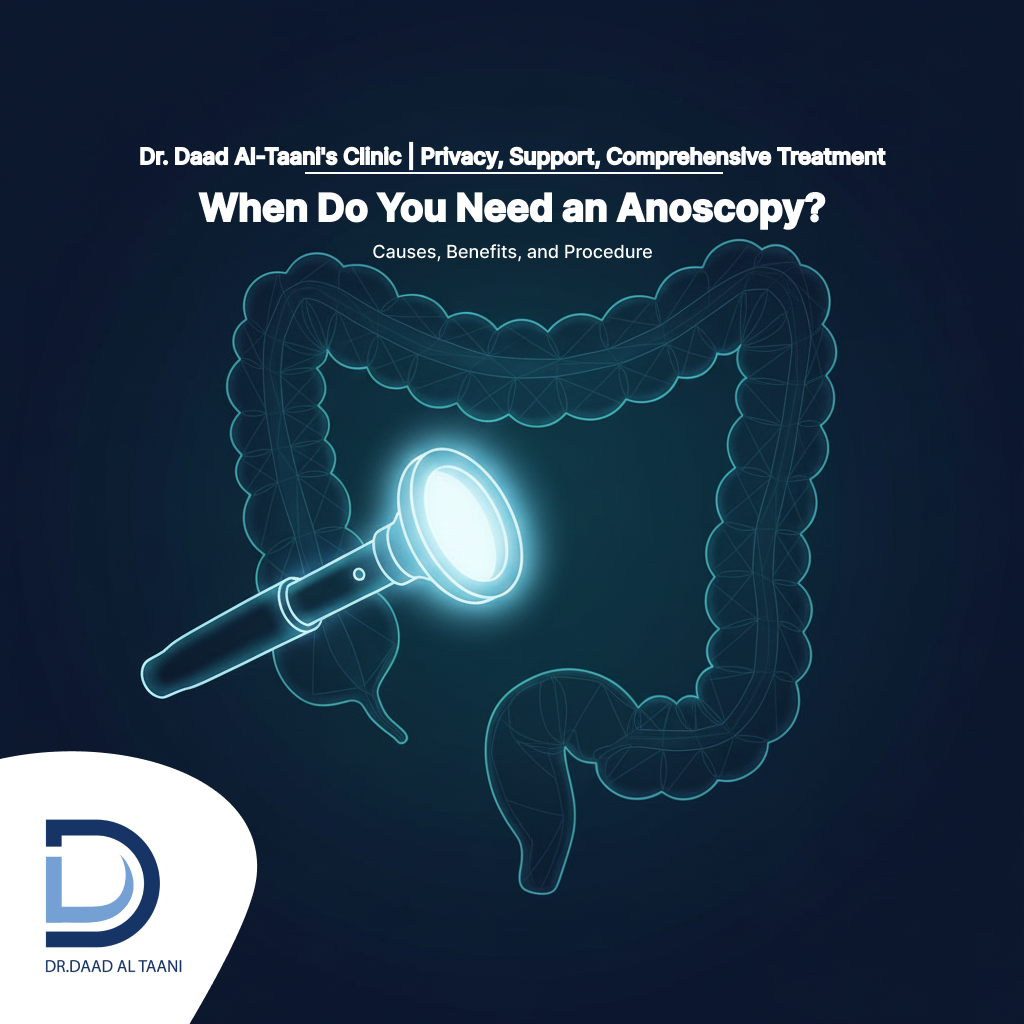
A proctoscopy is a medical test that uses a thin, flexible tube with a camera and light to examine the rectum and lower colon.
It helps in detecting inflammation, ulcers, tumors, and hemorrhoids accurately, and is often a key step in early diagnosis
Symptoms or Conditions That Require a Proctoscopy
1. Rectal Bleeding or Blood in the Stool
The appearance of bright red or dark blood in the stool may indicate inflammation, ulcers, or tumors.
Proctoscopy allows the doctor to identify the source of bleeding precisely.
2. Persistent Pain or Pressure in the Anal Area
Pain may be caused by ulcers, hemorrhoids, or digestive issues, and proctoscopy helps evaluate the condition.
3. Changes in Bowel Habits
Constipation or chronic diarrhea, or the feeling of incomplete evacuation—especially if persistent for more than two weeks.
4. Follow-Up for Known Conditions
Inflammatory bowel diseases such as Crohn’s disease or ulcerative colitis
Assessing healing of ulcers or rectal prolapse after treatment
5. Detection of Tumors or Abnormal Growths
Proctoscopy aids in early detection of benign or malignant growths, increasing the chances of successful treatment
How Proctoscopy is Performed
1. Preparation
- Bowel cleansing using an enema- or laxatives as instructed by the doctor
- Fasting for a few hours if required
2. During the Procedure
- The patient lies on their side
- The scope is gently inserted into the rectum
- The lining of the rectum and lower colon is viewed on a screen
- Biopsies may be taken if needed
3. Duration and Recovery
- Usually takes 10–20 minutes
- General anesthesia is typically not required
- Patients can return to normal activities immediately afterward
Benefits of Proctoscopy
- Accurate diagnosis of fissures, ulcers, or inflammation
- Early detection of polyps or tumors
- Assessment of treatment effectiveness for chronic conditions
- Guides appropriate medical or surgical interventions
Tips Before and After Proctoscopy
- Follow the doctor’s instructions for bowel cleansing
- Inform the doctor of any medications or chronic conditions
- Drink plenty of water afterward
- Monitor for unusual symptoms such as severe bleeding or pain
Conclusion
Proctoscopy is a safe and effective procedure that provides precise evaluation of rectal and lower colon problems. It is recommended for rectal bleeding, changes in bowel habits, persistent pain, chronic conditions, or early detection of tumors.
At Dr. Dhad Al-Ta’ani Clinic, we ensure a thorough and comfortable patient experience, prioritizing privacy and psychological comfort throughout the examination.