
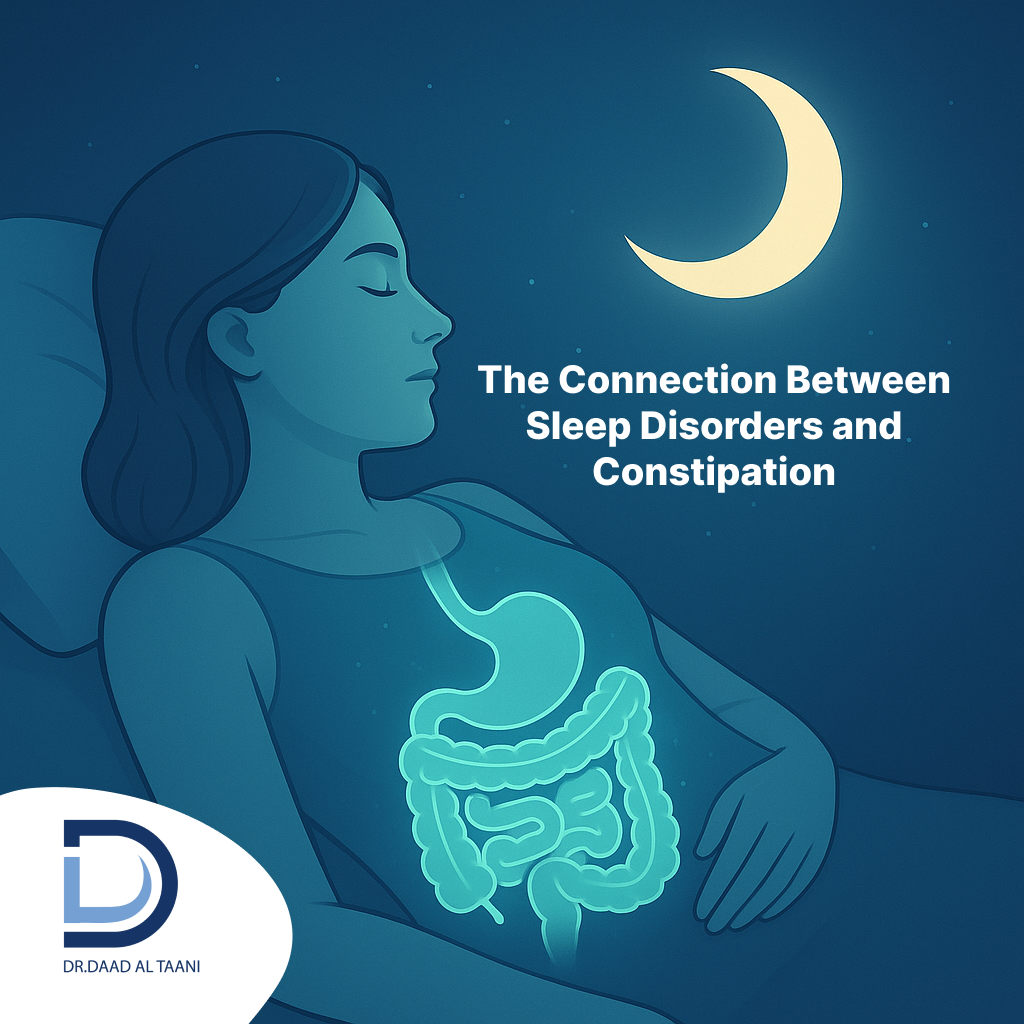
The Connection Between Sleep Disorders and Constipation

Interdiction

Good sleep is not a luxury — it’s essential for overall health, especially for the digestive system.

You might be surprised to know that poor or irregular sleep can directly affect bowel movements and increase the likelihood of constipation.

In this article from Dr. Daad Al-Taani’s Clinic, we explore the hidden link between sleep and bowel health, how sleep deprivation affects the colon, and practical steps to restore balance.

First: How Does the Digestive System Work During Sleep?

During sleep, the body enters a state of recovery and repair, including the digestive organs.

The brain regulates bowel activity through a network of nerves and hormones such as melatonin and serotonin, which control gut movement.

When sleep becomes irregular or insufficient, this delicate balance is disrupted — leading to slower or inconsistent bowel activity.

The Connection Between Sleep Disorders and Constipation

Second: How Are Sleep Disorders Linked to Constipation?

1. Disruption of the Circadian Rhythm

The intestines have their own internal clock that regulates bowel movements, especially in the morning.

Lack of sleep or staying up late confuses this rhythm, reducing bowel activity during the body’s natural elimination time and resulting in stool retention.


2. Elevated Stress Hormones

Sleep deprivation raises cortisol levels, a hormone associated with stress. High cortisol interferes with the nerves that control colon movement, leading to sluggish or irregular bowel contractions.


3. Weakened Brain-Gut Communication

Poor sleep affects the connection between the central nervous system and the enteric nervous system, reducing normal bowel contractions and increasing the risk of constipation.


4. Lifestyle Changes Associated with Sleep Loss

Staying up late often leads to skipping meals, late-night snacking, and low water intake — all of which contribute to constipation.

Third: Who Is More at Risk of Constipation from Poor Sleep?

  • Individuals working night shifts or irregular schedules.
  • People suffering from chronic insomnia or nighttime anxiety.
  • Women experiencing hormonal changes during menopause or after childbirth.
  • Those using sedatives or sleep medications that affect bowel function.


Common Symptoms:

  • Delayed or difficult bowel movements.
  • Feeling of fullness or abdominal pressure.
  • Recurrent bloating and gas.
  • Loss of appetite or fatigue.
  • Disturbed sleep due to abdominal discomfort.

How to Improve Sleep and Relieve Constipation?

1. Maintain Regular Sleep and Wake Times

A consistent sleep schedule helps restore your body’s circadian rhythm and supports healthy bowel movement timing.


2. Avoid Heavy Meals Before Bedtime

Have your last meal at least 3 hours before sleeping to allow proper digestion and reduce pressure on the colon while lying down.


3. Practice Relaxation Techniques

Deep breathing, meditation, or light stretching before bedtime can reduce nervous tension that affects bowel activity.


4. Stay Hydrated

Insufficient water intake is a key factor in constipation. Drink 1–2 cups of water upon waking and one before bed.


5. Start Your Morning with Movement

Gentle activity after waking, such as walking or stretching, stimulates bowel movement naturally.

How We Manage Sleep-Related Constipation at Dr. Daad Al-Taani’s Clinic?

  • Comprehensive assessment of sleep quality, habits, and medical history.
  • Detailed tests to rule out organic causes such as IBS or thyroid dysfunction.
  • Integrated management combining sleep improvement strategies with dietary guidance.
  • Behavioral and psychological support to balance the nervous system and restore healthy function.

Conclusion

Sleep is not merely rest — it is a vital regulator of gut function.

Lack of quality sleep disrupts bowel movement, increases stress hormones, and can lead to chronic constipation.
Regular, restful sleep restores the brain–gut connection and helps the digestive system function smoothly.

At Dr. Daad Al-Taani’s Clinic, we focus on treating constipation from its roots — by addressing both physical and lifestyle factors, including sleep — so you can regain comfort, rhythm, and digestive harmony.

Share:

Tags:

Latest Articles
Tags

You Can Contact Us Anytime

Related Articles

Call Now اتصل الآن

يمكنك البحث عن الخدمات التي نقدمها

You can search for the services we provide