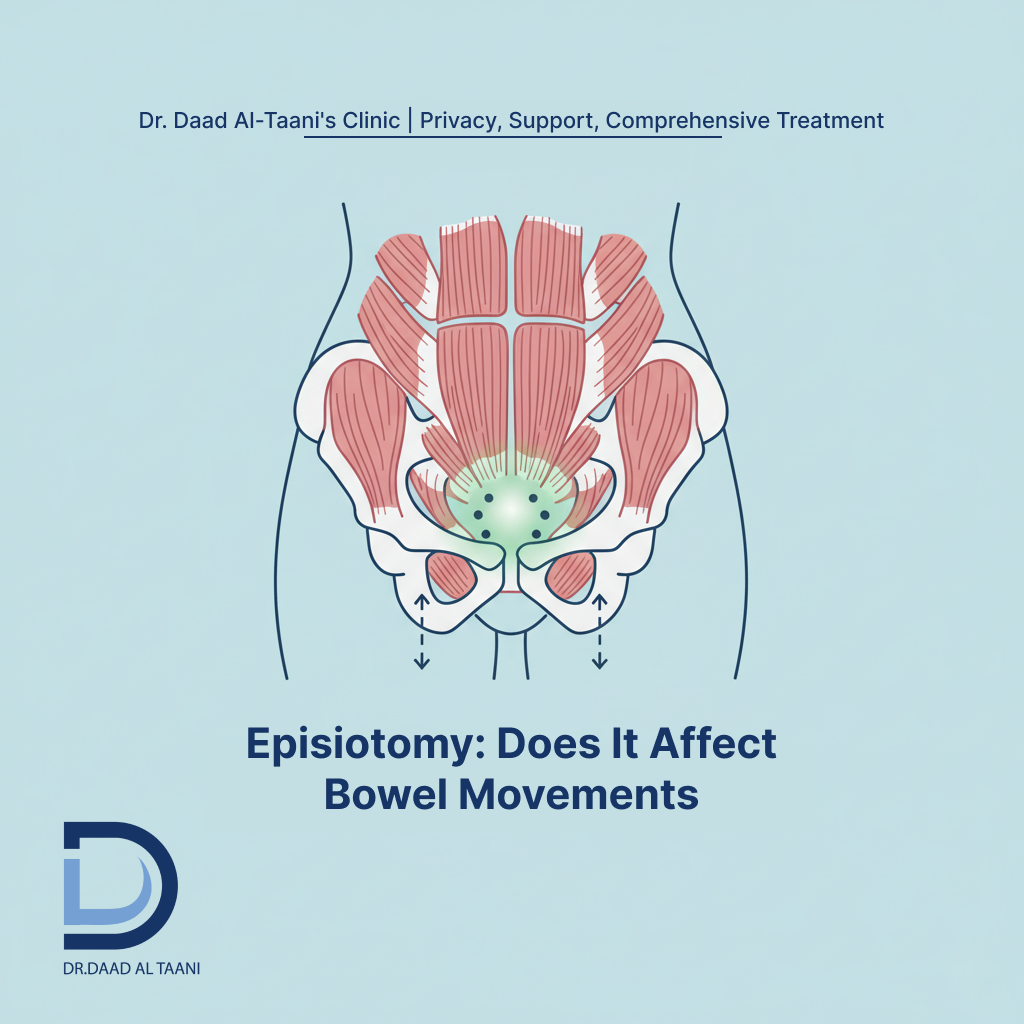
Episiotomy: Does It Affect Bowel Movements?

Episiotomy: Does It Affect Bowel Movements?

Interdiction

The postpartum period is a delicate stage that requires care and awareness — especially for women who have undergone an episiotomy during vaginal delivery. This small surgical cut made in the perineum (the area between the vagina and anus) helps facilitate the baby’s passage during difficult births. However, many new mothers wonder: Does episiotomy affect bowel movements or control after childbirth?
In this article from Dr. Daad Al Taani Clinic, we explain how an episiotomy can influence bowel function, what’s normal, and when to seek medical advice.

What Is an Episiotomy and Why Is It Done?

An episiotomy is a minor surgical incision made in the perineal tissue to enlarge the vaginal opening and prevent uncontrolled tearing during delivery. It’s usually performed in specific situations, such as:

  • Large baby size or tight birth canal.
  • Prolonged or difficult labor.
  • Signs of fetal distress during delivery.

The incision is sutured after birth with dissolvable stitches and generally heals within a few weeks.

Episiotomy: Does It Affect Bowel Movements?

How Does an Episiotomy Relate to Bowel Function?

The perineum lies between the pelvic floor and anal sphincter muscles, which are essential for controlling urination and defecation.

Because of this proximity, some women may experience the following symptoms in the early days postpartum:

  • Pain during bowel movements.
  • Fear or hesitation when passing stool.
  • Mild constipation due to pain or muscle tension.

These symptoms are temporary and usually improve as the wound heals and pelvic floor strength returns.

When Can an Episiotomy Actually Affect Bowel Control?

In most cases, an episiotomy does not cause long-term bowel issues, but complications may occur if the incision was deep or healing was incomplete. Possible issues include:

  • Minor weakness in pelvic or anal muscles.
  • Difficulty controlling gas or stool.
  • Persistent pain during sitting or defecation.

If such symptoms persist, evaluation by a pelvic floor specialist is essential to assess muscle condition and start targeted rehabilitation.


Recovery and Care After an Episiotomy

First: Proper Wound Care

Keep the perineal area clean and dry.

Avoid constipation by drinking enough water and eating high-fiber foods.

Use warm compresses to ease discomfort.

Avoid long sitting periods or lifting heavy objects during the first weeks.


Second: Pelvic Floor Exercises

Once the stitches heal, start Kegel exercises daily to enhance blood flow and strengthen pelvic and anal muscles.

These exercises prevent weakness and improve bowel control.


Third: Medical Follow-Up

If pain or difficulty in bowel movement continues beyond 4–6 weeks, consult your doctor.

Biofeedback therapy and pelvic rehabilitation sessions are highly effective for restoring muscle coordination and strength.


At Dr. Daad Al Taani Clinic, We provide comprehensive postpartum recovery care, including:

  • Complete pelvic floor and perineal muscle assessment
  • Personalized treatment and rehabilitation plans
  • Care by women’s health physiotherapists
  • Guidance for safe, confident recovery after delivery

Conclusion

An episiotomy is a safe medical procedure when needed and rarely causes lasting bowel problems.

Temporary pain or mild constipation is normal and resolves as healing progresses.

With proper hygiene, balanced nutrition, and regular exercises, full bowel control and comfort return within a few weeks.

Share:

Tags:

Latest Articles
Tags

You Can Contact Us Anytime

Related Articles

Call Now اتصل الآن

يمكنك البحث عن الخدمات التي نقدمها

You can search for the services we provide