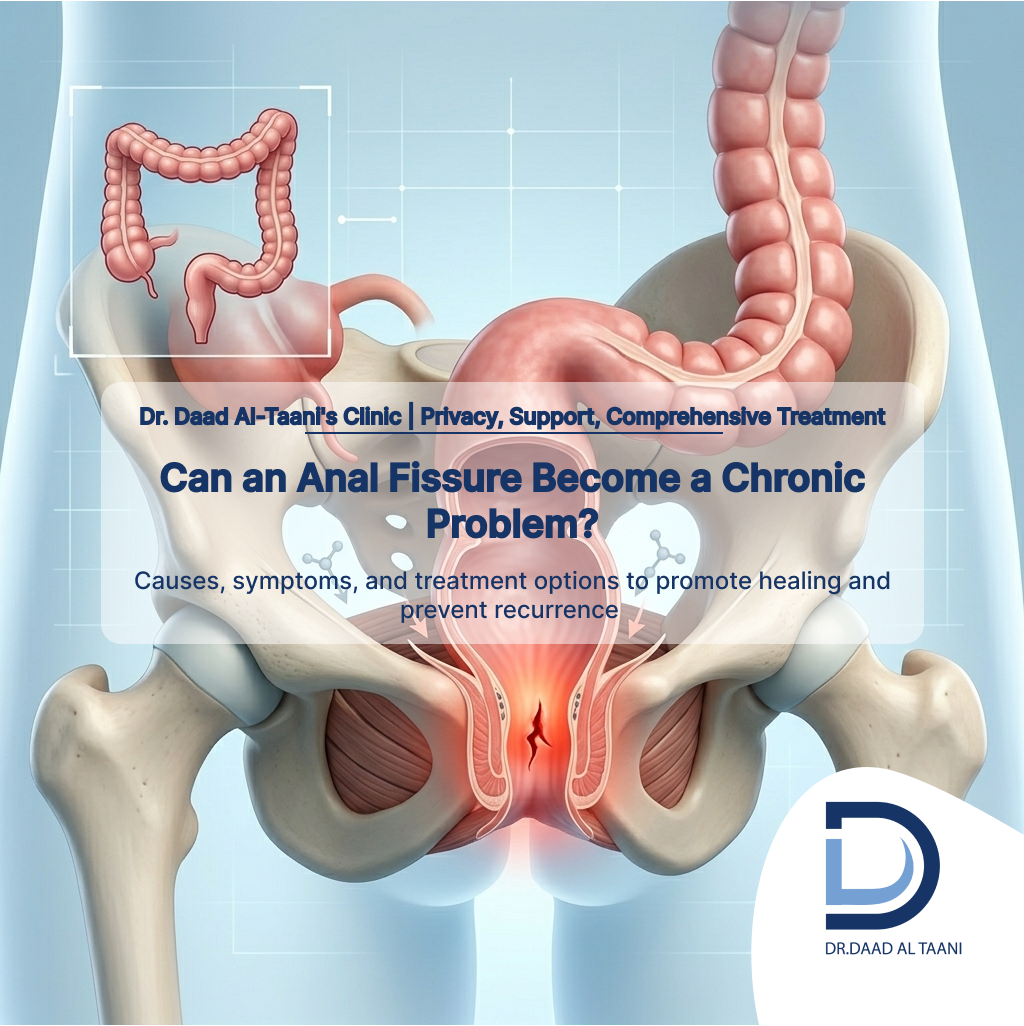
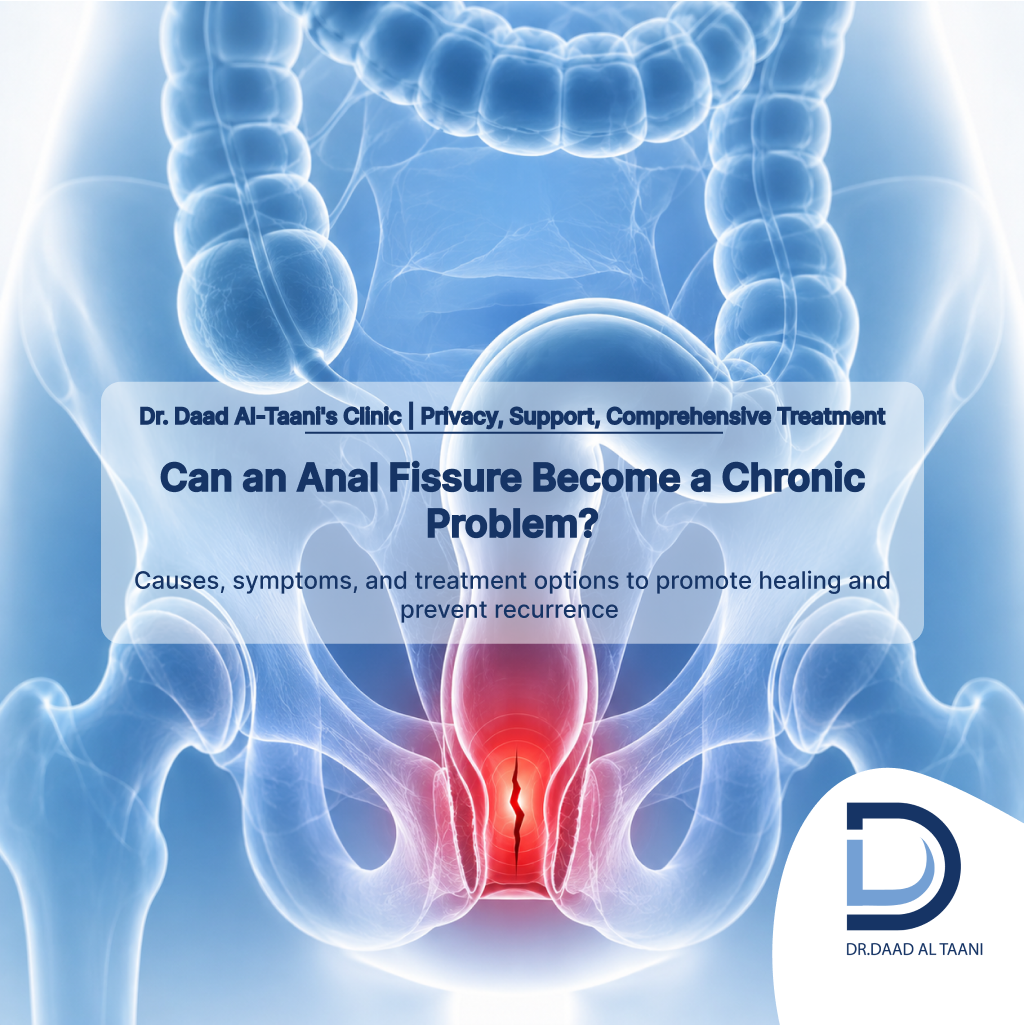
An anal fissure is a small tear in the lining of the anal canal. It commonly occurs due to passing hard or large stools, chronic constipation, or repeated episodes of diarrhea. In most cases, an anal fissure is a painful but temporary condition that heals within a few weeks with proper care and lifestyle adjustments.

However, in some cases, the fissure fails to heal completely and may develop into a chronic condition. When this happens, symptoms can persist or recur over time, especially if the underlying cause is not addressed.

When does an anal fissure become chronic?

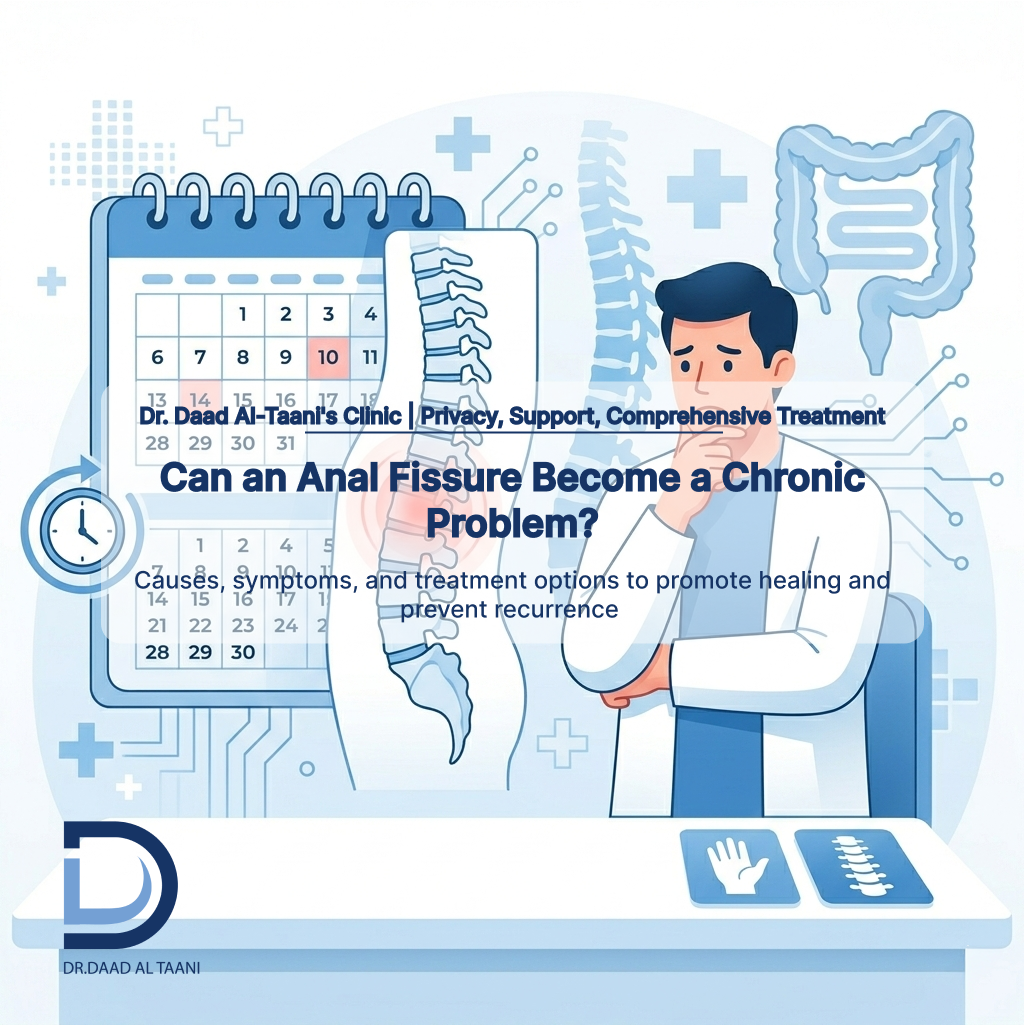
A fissure is generally considered chronic when it lasts longer than 6 to 8 weeks without complete healing. At this stage, the tissue around the tear may change. The edges can become thicker and less flexible, and blood flow to the area may decrease, making healing more difficult.

People with ongoing constipation or repeated straining during bowel movements are more likely to develop chronic fissures. Increased tension in the internal anal sphincter muscle can also reduce blood supply and delay healing.

Can it last for life?

Medically, an anal fissure is not considered a lifelong disease in most cases. However, it can become a recurring or long-term condition if the underlying causes persist. Some individuals may experience repeated episodes over several years, especially if constipation or poor bowel habits continue.

The important point is that even chronic fissures are usually treatable, and many cases can fully resolve with proper management.

Why do fissures become chronic?

Several factors contribute to chronicity, including:

  • Chronic constipation and low fluid intake 
  • Low dietary fiber consumption 
  • Prolonged straining during bowel movements 
  • Excessive tightening of anal muscles 
  • Repeated local irritation or inflammation 
  • Reduced blood flow in the anal region

Symptoms of a chronic fissure

In chronic cases, symptoms may differ from acute fissures and include:

  • Persistent pain after bowel movements 
  • Burning or itching sensations 
  • Recurrent mild bleeding 
  • Ongoing discomfort in the area 
  • In some cases, small skin tags near the fissure

Can it be treated?

Yes, most anal fissures can be treated successfully. Initial treatment usually includes conservative measures such as:

  • Increasing dietary fiber intake
  • Drinking plenty of water
  • Using mild stool softeners if needed
  • Warm sitz baths to reduce pain and spasm
  • Topical creams that relax the anal sphincter and improve blood flow

For chronic cases that do not respond to conservative treatment, doctors may recommend advanced options such as botulinum toxin injections or minor surgical procedures to relax the anal muscle and promote healing.

Conclusion

An anal fissure is usually not a serious condition, but it can become chronic if ignored or if the underlying causes persist. However, it is not typically a lifelong disease. With proper treatment and lifestyle changes, most cases can heal completely and symptoms can be effectively controlled.

Share:

Tags:

Latest Articles
Tags

You Can Contact Us Anytime

Related Articles

Call Now اتصل الآن

You can search for the services we provide

You can search for the services we provide