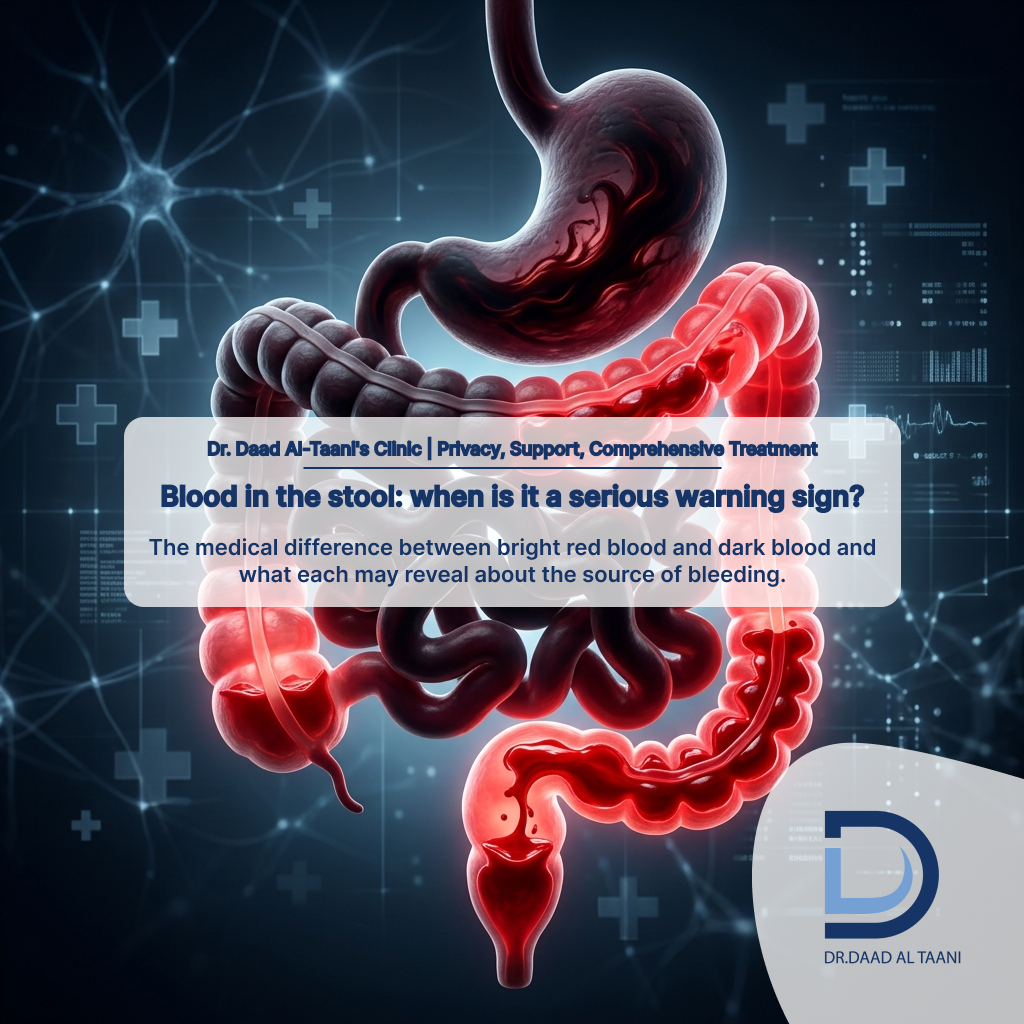
Discovering blood in your stool is a symptom that immediately triggers anxiety. However, it is essential to understand that while it requires attention, it is not always a sign of a life-threatening illness.

In medicine, the color of the blood in the stool acts as an initial diagnostic roadmap. It provides critical clues regarding the exact location of the bleeding within your gastrointestinal (GI) tract. Let’s delve into the crucial differences between bright red and dark or black blood in stool, their causes, and when you should seek professional medical advice.


Bright Red Blood in Stool

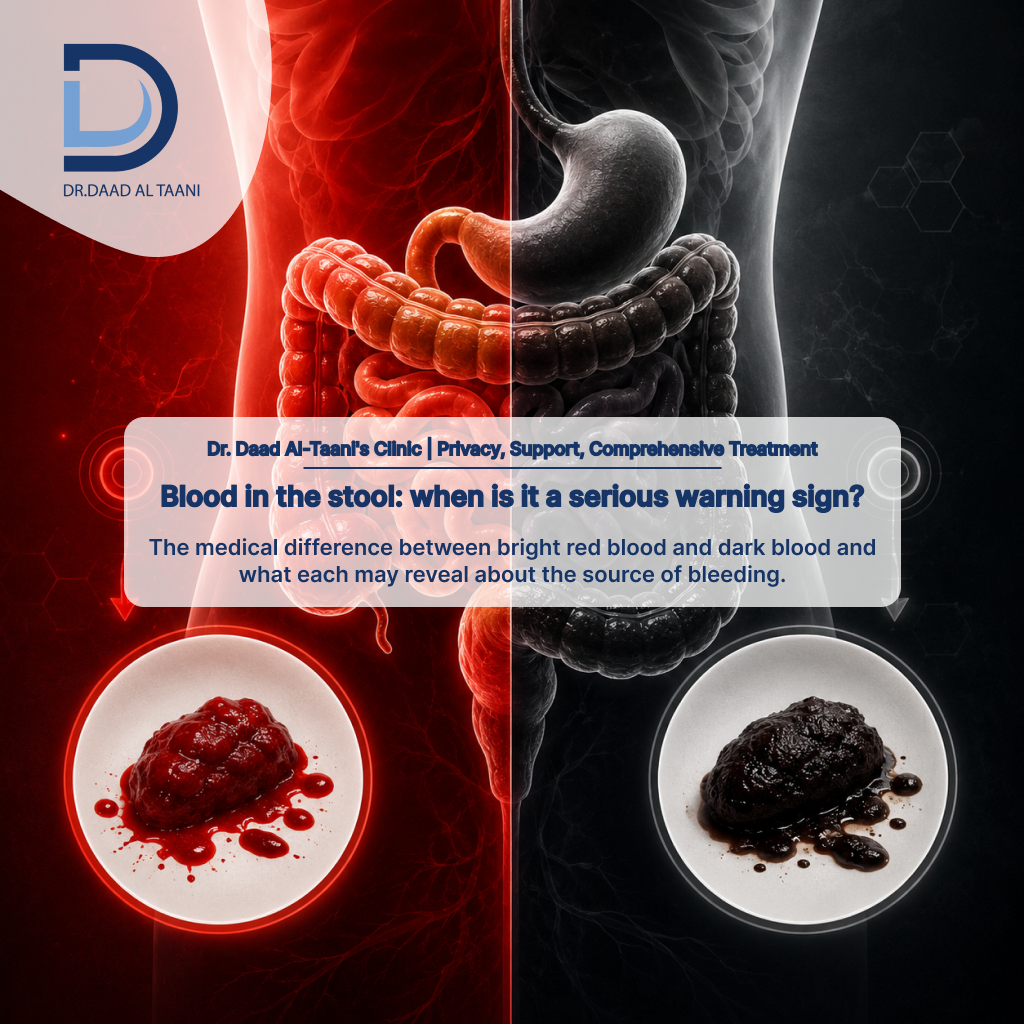
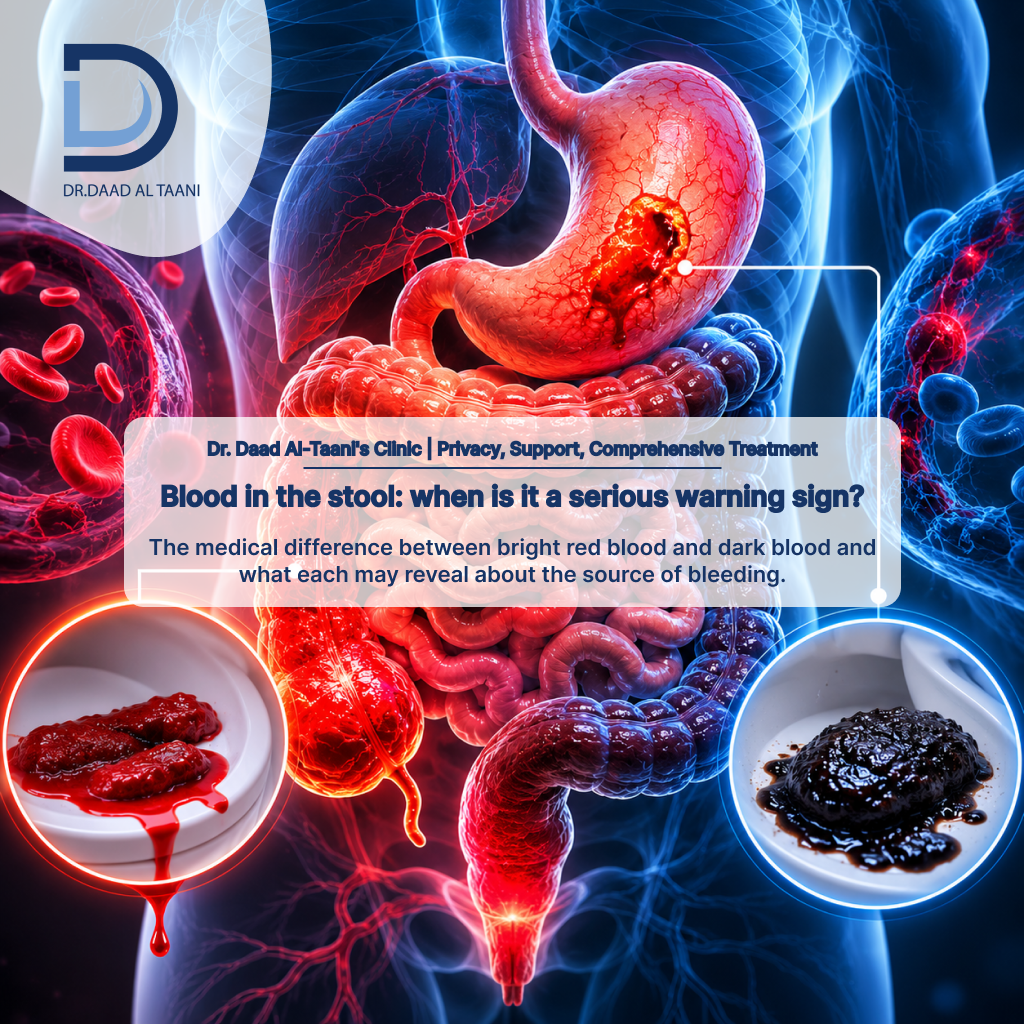
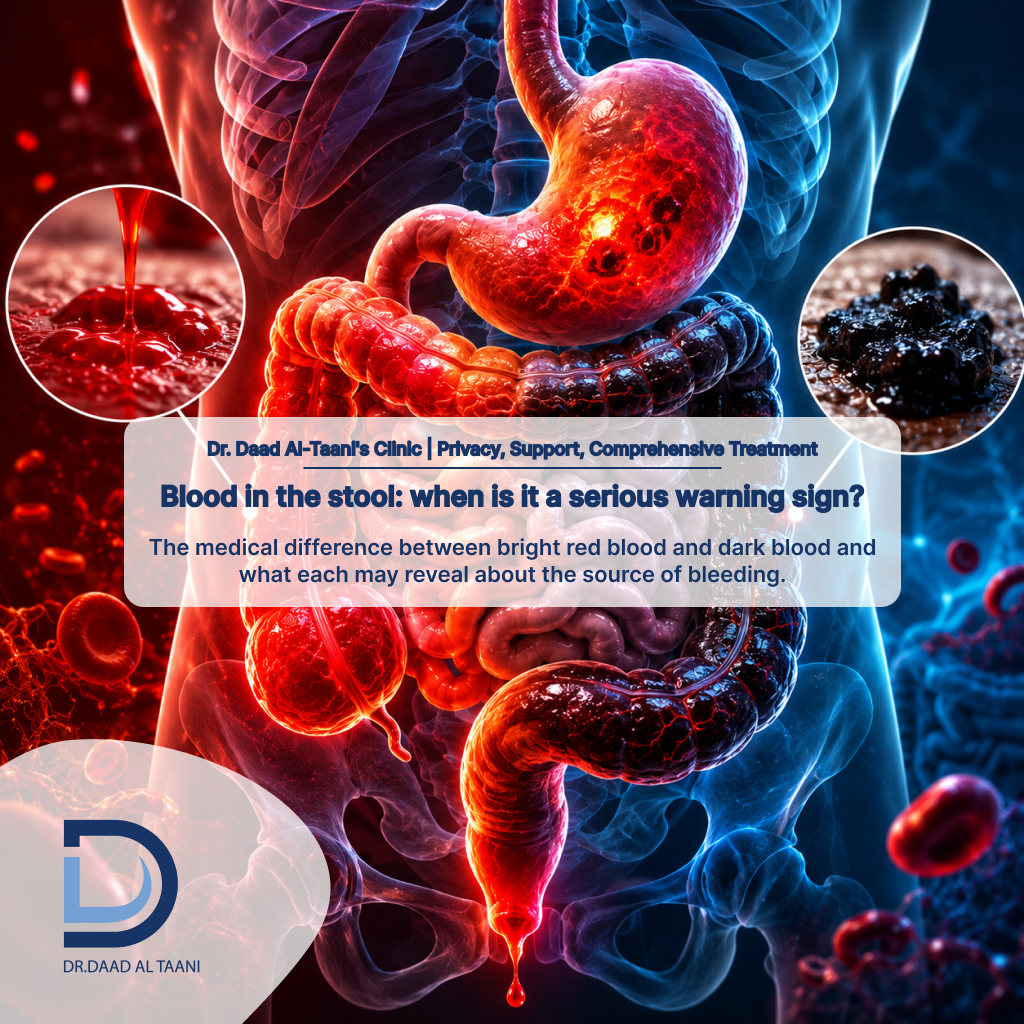
Bright red blood usually indicates bleeding from the lower part of the digestive system, such as the rectum or anus.


Common Causes of Bright Red Blood:

  • Hemorrhoids.
  • Anal Fissures.
  • Rectal inflammation
  • Lower colon irritation
  • Constipation-related trauma

How Does It Appear?

  1. Fresh red blood on stool surface
  2. Blood on toilet paper
  3. Small drops in the toilet bowl

Is It Serious?

In most cases, it is not dangerous, especially when:

  • The amount is small
  • It is linked to constipation
  • There are no other alarming symptoms

However, persistent bleeding should always be evaluated.

2. Dark or Black Blood in Stool

Dark or black stool (known as melena) usually indicates bleeding from the upper gastrointestinal tract.


Common Causes of Dark or Black Blood:

  • Stomach or duodenal ulcers
  • Severe Gastritis.
  • Esophageal Varices.
  • Long-term use of NSAIDs
  • Upper Intestinal Bleeding.

How Does It Appear?

  1. Black, tar-like stool
  2. Strong and unusual odor
  3. Blood is not visibly red because it is digested

Is It Serious?

Yes. Melena is often considered a medical warning sign and may indicate internal bleeding that requires urgent evaluation.

Key Differences: At a Glance

Feature Bright Red Blood Dark / Black Blood (Melena)
Color Bright, vibrant red Dark red, maroon, or pitch-black
Likely Source Lower GI tract (rectum, anus, lower colon) Upper GI tract (stomach, duodenum, esophagus)
Mechanism Fresh blood that has not been digested Digested blood that reacted with stomach acid
Primary Causes Hemorrhoids, anal fissures, constipation Stomach ulcers, gastritis, NSAID abuse
Risk Level Usually mild and localized High risk; requires immediate clinical workup

 When to See a Doctor Immediately

  • Black or tarry stools


  • Heavy or recurring bleeding


  • Dizziness or weakness


  • Severe abdominal pain


  • Unexplained weight loss

 Conclusion

The color of blood in stool is an important diagnostic clue rather than just a symptom. Bright red blood is often linked to minor anorectal conditions, while dark or black stool may indicate upper gastrointestinal bleeding that requires urgent medical attention.

Share:

Tags:

Latest Articles
Tags

You Can Contact Us Anytime

Related Articles

Call Now اتصل الآن

You can search for the services we provide

You can search for the services we provide