Digestive disorders are common, and many people confuse chronic constipation with irritable bowel syndrome (IBS) because some symptoms overlap. However, these are two different conditions in terms of causes, symptom patterns, and treatment. Understanding the difference between chronic constipation and IBS helps ensure accurate diagnosis and proper management.
The Difference Between Chronic Constipation and Irritable Bowel Syndrome | When Should You See a Specialist in the UAE?
What Is Chronic Constipation?
Chronic constipation refers to infrequent or difficult bowel movements lasting for several weeks or months. It is usually diagnosed when a person has fewer than three bowel movements per week for more than three months.
Symptoms of Chronic Constipation:
- Fewer than three bowel movements per week
- Hard or lumpy stools
- Straining during bowel movements
- A feeling of incomplete evacuation
- Abdominal bloating or mild discomfort
Causes of Chronic Constipation:
- Low fiber intake
- Inadequate hydration
- Lack of physical activity
- Prolonged sitting
- Certain medications
- Pelvic floor dysfunction
- Ignoring the urge to pass stool
Persistent constipation should not be ignored, especially if symptoms continue despite lifestyle changes.
What Is Irritable Bowel Syndrome (IBS)?
Irritable bowel syndrome is a functional gastrointestinal disorder that affects bowel habits without causing structural damage to the intestines. It is one of the most common digestive disorders worldwide.
Although IBS does not lead to permanent intestinal damage, it can significantly affect daily comfort and quality of life.
Symptoms of IBS:
- Abdominal pain or cramping
- Bloating and gas
- Constipation, diarrhea, or alternating between both
- Relief of pain after bowel movements
- Symptoms triggered or worsened by stress
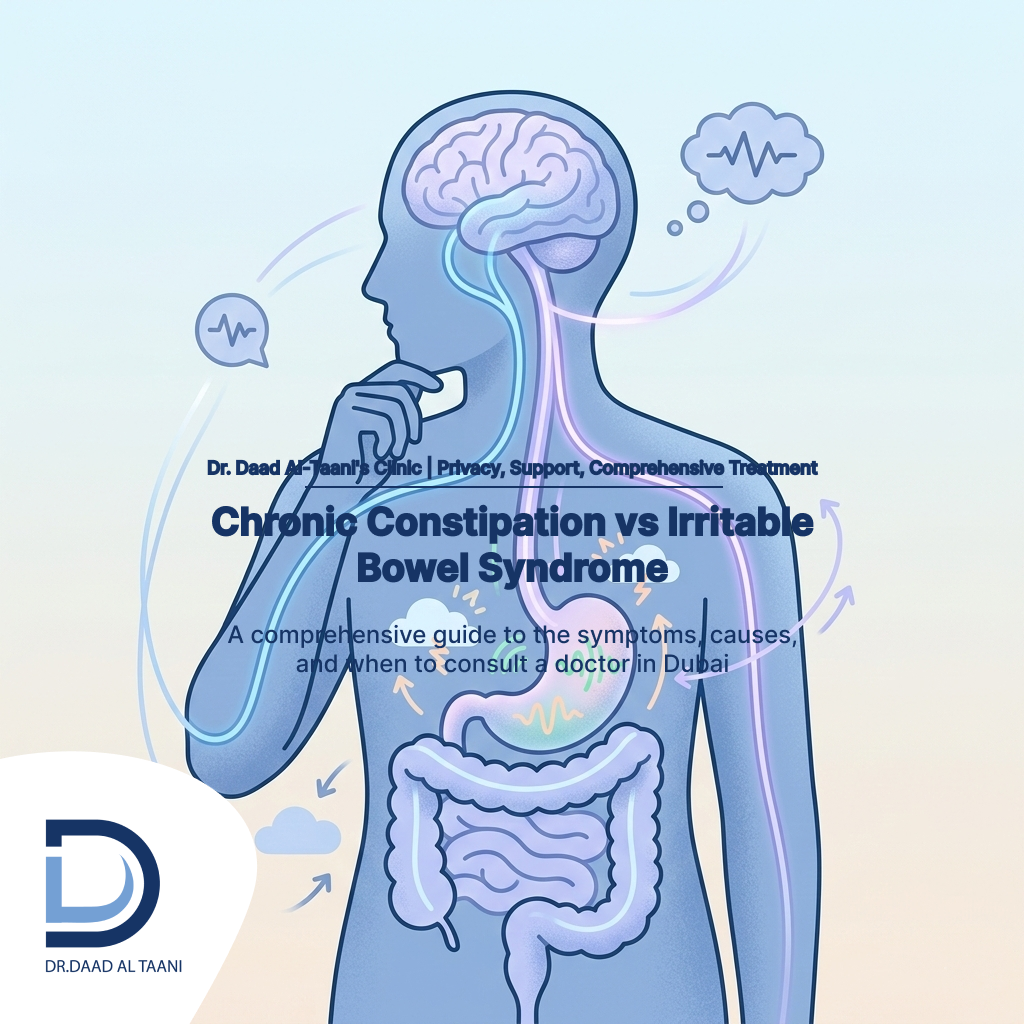
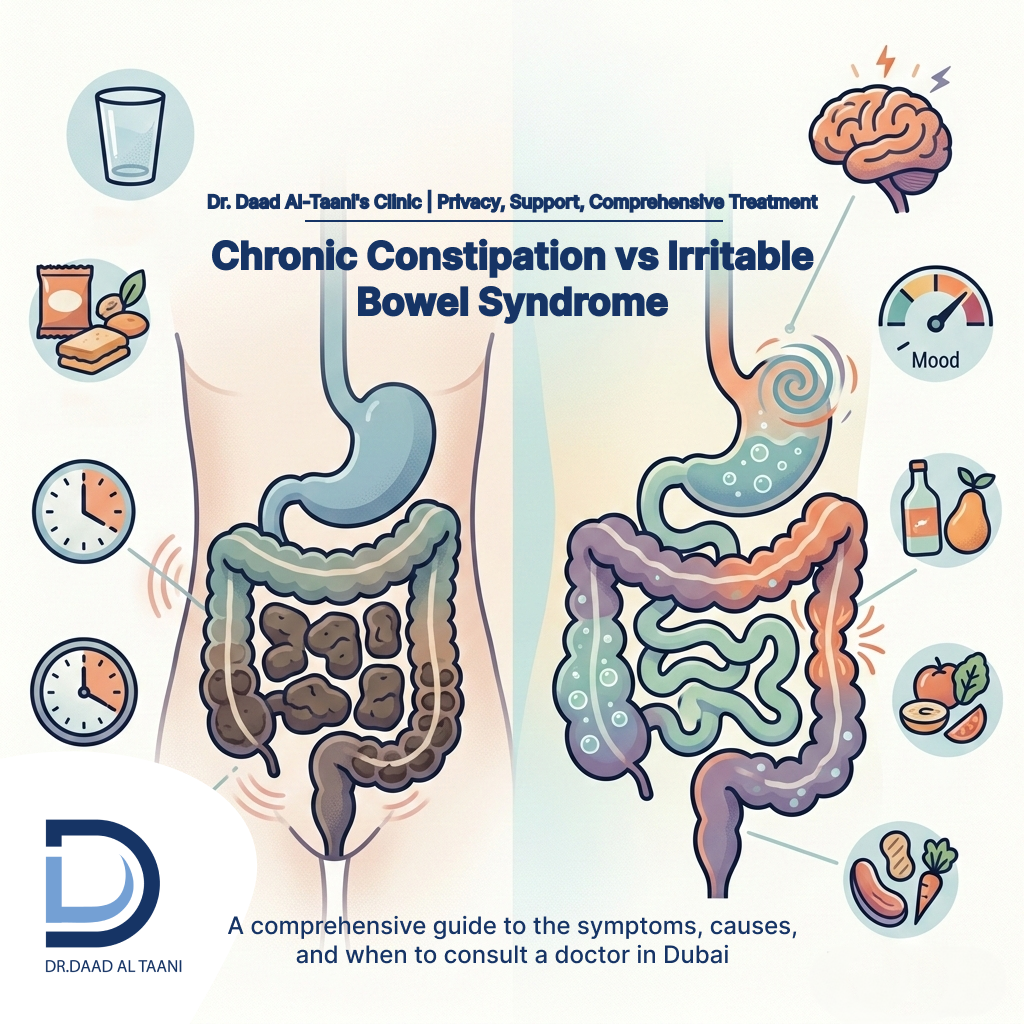
Unlike chronic constipation, IBS is strongly linked to the gut–brain connection and emotional stress.
Key Differences Between Chronic Constipation and IBS
1. Nature of Pain
In chronic constipation, discomfort is usually related to stool buildup and straining. Pain is not always the main symptom.
In IBS, abdominal pain is a core symptom and typically improves after a bowel movement.
2. Bowel Pattern
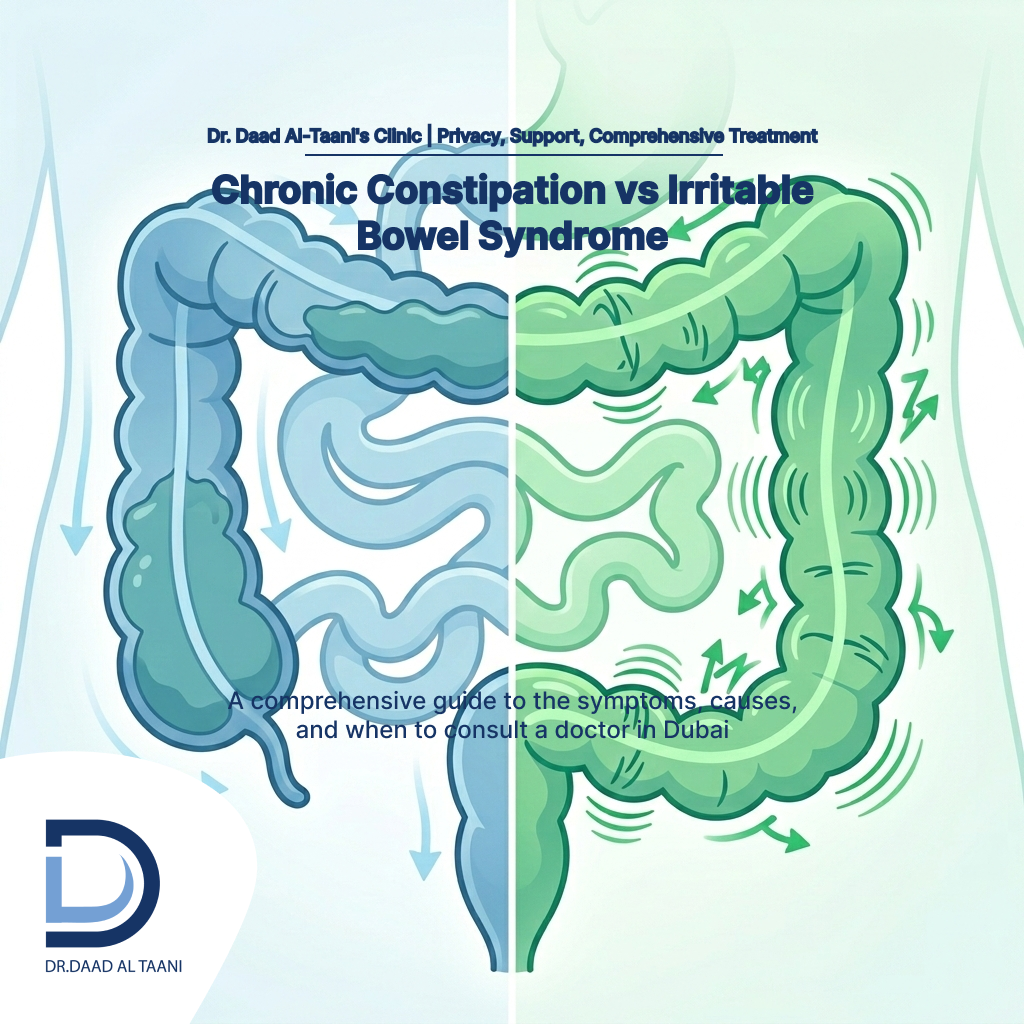
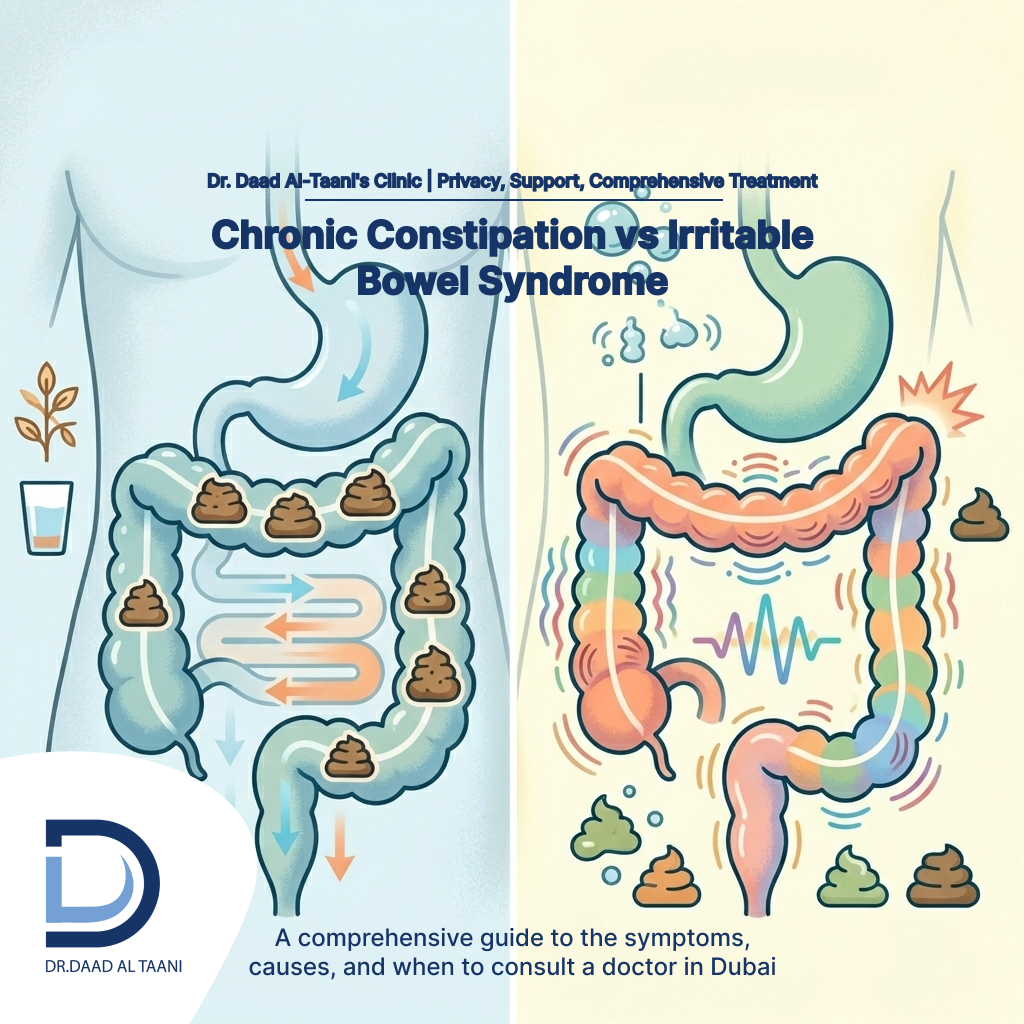
Chronic constipation involves persistent difficulty passing stool.
IBS may present with constipation, diarrhea, or a combination of both.
3. Psychological Influence
Chronic constipation is often associated with diet, hydration, or inactivity.
IBS symptoms are highly influenced by stress and emotional factors.
4. Underlying Mechanism
Chronic constipation may result from dietary habits, medication use, or pelvic floor problems.
IBS is a functional disorder characterized by increased intestinal sensitivity and altered motility without structural abnormalities.
Can Both Conditions Occur Together?
Yes. Some individuals may have IBS with constipation (IBS-C). This is why professional evaluation is important, as treatment approaches differ depending on the exact diagnosis.
When Should You See a Specialist?
You should consult a gastroenterologist or colorectal specialist if you experience:
- Constipation lasting more than three weeks despite dietary changes
- Rectal bleeding
- Unexplained weight loss
- Severe or persistent abdominal pain
- A sudden change in bowel habits after age 40
- A family history of colon disease
These warning signs may indicate a more serious condition that requires medical assessment.
Diagnosis
Diagnosis begins with a detailed medical history and physical examination. Additional tests may include blood tests, imaging studies, colonoscopy when indicated, or pelvic floor assessment.
IBS is typically diagnosed after ruling out structural or inflammatory diseases.
Treatment Options
Treatment for Chronic Constipation:
- Increasing fiber intake
- Drinking sufficient water
- Regular physical activity
- Establishing consistent bowel habits
- Physician-guided laxatives when necessary
Treatment for IBS:
- Stress management
- Dietary adjustments
- Avoiding trigger foods
- Medications to regulate bowel movements
- Psychological support in selected cases
Conclusion
The difference between chronic constipation and irritable bowel syndrome lies in their causes, symptom patterns, and management strategies. Chronic constipation is often related to lifestyle or functional issues, while IBS is a functional gastrointestinal disorder influenced by stress and gut sensitivity.
If symptoms persist or are accompanied by alarming signs such as bleeding or unexplained weight loss, seeking specialist evaluation is essential. Early diagnosis allows for appropriate treatment and improves overall digestive health and quality of life.